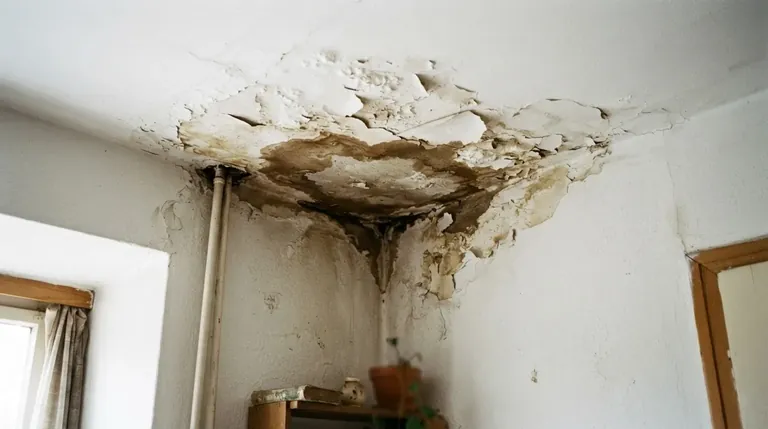
Ceiling Leak Water Damage in Conroe, TX: First Steps
A sagging or bulging ceiling means water is pooling above it; treat that as a safety issue first, and call a provider before the ceiling gives way.
A Ceiling Leak Is Not Always What It Looks Like
A stain on your ceiling means water has already traveled through insulation, drywall, and framing before it reached a surface you can see. A sagging, bulging, or soft spot means water is pooling above the ceiling right now and the material could give way under its own weight.
- Keep people and pets out of the room below a sagging or bulging ceiling area until a qualified provider has addressed it.
- Photograph the stain, the sag, and the surrounding ceiling and walls before any repair work starts.
If you have not yet reported the underlying leak or shut off water to the area, see who to call first in Conroe before you deal with the ceiling itself.
What Usually Causes a Ceiling Leak
A ceiling leak can come from a roof problem, a plumbing line in the floor above, or condensation from an attic air conditioning unit. Where the water started determines both the safety risk and who is responsible for the repair, so identifying the source matters before you dry anything out.
| Possible Source | Why It Matters | Verified |
|---|---|---|
| Roof leak | Water can travel along framing before it shows on the ceiling, so the wet area can be larger than the visible stain | Checked: September 2026 |
| Upstairs plumbing or a burst pipe | Usually a sudden, accidental discharge, which most standard policies treat differently from a slow leak | Checked: September 2026 |
| Attic HVAC condensate line | Can leak slowly for a long time before a stain appears, which affects how an insurer classifies the loss | Checked: September 2026 |
A restoration provider or a licensed plumber can trace the source; do not assume it is the roof just because the stain is on the ceiling.
Will Your Homeowners Policy Pay for a Ceiling Leak?
It depends on how the water got there. A sudden and accidental discharge, such as a burst supply line, is usually covered under most standard policies. Continuous leakage, seepage over time, and flood are usually excluded, and your policy wording controls what actually happens with your claim.
- A pipe that bursts suddenly and floods a ceiling cavity is commonly treated as a covered, sudden loss, subject to your deductible.
- A slow drip from a condensate line or a small roof leak that went unnoticed for weeks is commonly treated as excluded continuous seepage.
- Mold that follows a covered water loss may have separate, limited coverage; mold on its own, without a covered loss behind it, is usually excluded.
This page is general information, not legal or insurance advice. Read TDI's consumer guide on water damage and mold and your own policy before assuming what is or is not covered.
Insurer Response Times Under Texas Law
Texas Insurance Code Chapter 542 sets deadlines for how your insurer must handle a claim once you report it. These deadlines run from specific triggers, such as when the insurer receives notice or when it receives your completed paperwork, not from when it feels ready to respond.
| Step | Deadline | Verified |
|---|---|---|
| Insurer acknowledges your claim and requests documents | Not later than the 15th day after the insurer receives notice of the claim, or the 30th business day for an eligible surplus lines insurer, under Sec. 542.055(a) | Checked: September 2026 |
| Insurer accepts or rejects your claim | Not later than the 15th business day after the insurer receives all required items, statements, and forms, under Sec. 542.056(a) | Checked: September 2026 |
| Insurer needs more time to accept or reject | Not later than the 45th day after the date the insurer notifies you it needs more time, under Sec. 542.056(d) | Checked: September 2026 |
| Insurer pays an accepted claim | Not later than the fifth business day after the date the insurer notifies you it will pay, under Sec. 542.057(a) | Checked: September 2026 |
| Weather-related catastrophe or major natural disaster, as defined by the commissioner | The deadlines above extend by an additional 15 days, under Sec. 542.059(b) | Checked: September 2026 |
If your insurer takes more than 60 days past receiving your complete documentation to pay an accepted claim, Sec. 542.058(a) makes it liable for additional interest and costs under Sec. 542.060. Read the full text at Texas Insurance Code Chapter 542.
Permits for Ceiling and Drywall Repairs
Whether a ceiling repair needs a permit depends on the scope of the work, not a simple list of materials. Call Building Inspections & Permits at (936) 522-3610 and ask whether your specific repair needs a permit before work starts; that call is the most reliable way to know for certain.
- Ask Building Inspections & Permits whether your repair needs a permit before you schedule any work.
- Ask the provider you hire whether they or you are responsible for pulling any required permit.
See the City of Conroe Building Permits FAQ for current requirements. For repair steps beyond the ceiling itself, see the Conroe water damage overview.
If That Did Not Work
A ceiling leak can turn into a longer process than it first looks. Here is what to do if the source is still not clear, if your insurer has gone past a deadline, or if you are not sure whether a permit applies to your repair.
- Try again: if a restoration provider cannot confirm the source of the leak on the first visit, ask what additional checks they recommend before any drywall is opened up.
- Try another route: if your insurer has passed a Chapter 542 deadline without acting, raise the specific section and the date you reported the claim directly with the insurer.
- Who to contact: for a dispute about how your claim was handled, call the Texas Department of Insurance consumer help line at 800-252-3439, 8 a.m. to 5 p.m. Central, Monday through Friday.
If the ceiling area has stayed wet, read mold rules after water damage in Conroe next. For the wider picture of repairs after water damage, see the Conroe water damage overview.
Frequently Asked Questions
Does insurance cover a ceiling leak from a burst pipe?
What if my ceiling leak comes from a slow, ongoing drip instead?
By when must my insurer confirm it received my claim?
When must my insurer accept or reject my claim?
How soon must the insurer pay once it accepts my claim?
Do I need a permit to repair ceiling drywall in Conroe?
Water in your home right now?
See who to call first in Conroe, how to reach your water provider, and how to check your flood zone.
Who to Call First in Conroe